
Study in Korea: University & Language
There are two main ways to study in Korea: a degree at a university (bachelor's, master's, PhD), or Korean-language courses at a university institute — often the first step before a degree. Pick the path that matches your Korean level and budget.
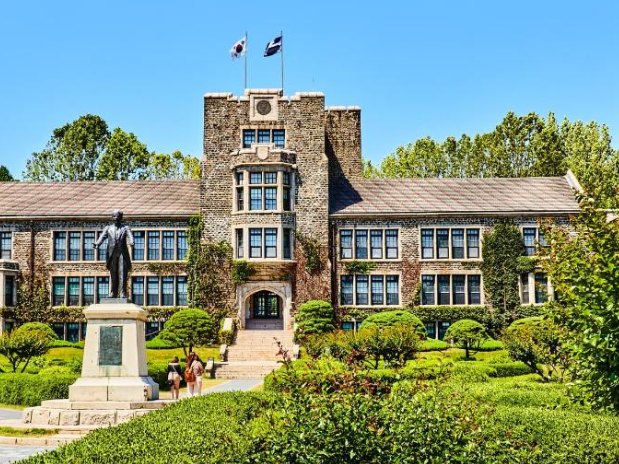 Degree
University admission
Popular Seoul universities, cheaper regional options, intake calendar, documents, GKS scholarship, D-2 visa, part-time work, costs and scams to avoid.
 Korean language
Language institutes (어학당)
Compare Yonsei, Sogang, SNU, Korea University, SKKU, Hanyang and regional institutes: fees, 2027 terms, application, documents, D-4-1 visa and part-time rules.
Which path is right for you?
| Language institute (D-4-1) | University degree (D-2) | |
|---|---|---|
| Best for | Beginners to TOPIK 3; building Korean before a degree | TOPIK 4+ (Korean-taught) or English-taught programmes |
| Length | 10-week terms, 4 per year (usually up to about 2 years on D-4) | Bachelor's 4 years; master's 2; PhD 3+ |
| Cost (tuition) | About KRW 1.1–1.96 million per term | About KRW 4–14 million per year |
| Financial proof | About USD 10,000 / KRW 10 million (varies) | About USD 20,000 / KRW 20 million (varies) |
| Part-time work | After about 6 months, limited hours | With permission; more hours at higher TOPIK levels |
| Next step | TOPIK 3–4, then apply to a university | Graduate, then D-10 / E-7 job search |
Common route in four steps
- Learn the basics now. Hangul and beginner vocabulary — free on Run Korean.
- Join a university language institute for 2–4 terms to reach TOPIK 3–4.
- Take TOPIK and apply to a university (see the free TOPIK mock test).
- Switch to D-2 and start your degree, then plan for D-10 or a job after graduation.
General information only — not legal or immigration advice. Confirm all details with the school and the Korean embassy.
Frequently asked questions
Should I start with a language course or apply straight to a university?
If your Korean is below TOPIK 3–4 and you want a Korean-taught degree, a language institute is the usual first step. If you qualify for an English-taught programme or already have TOPIK 4+, you can apply straight to a university.
Which visa do I need to study in Korea?
D-4-1 for university Korean-language courses and D-2 for degree programmes. You can change from D-4 to D-2 inside Korea after admission.
When should I apply?
Language institutes accept applications about 6–9 weeks before each of their four yearly terms (March, June, September, December). Universities have a spring (March) and a fall (September) intake, with applications 4–9 months ahead.
Get ready for Korea: learn Korean free
Create a free account to practise EPS-TOPIK, TOPIK and everyday Korean, keep your scores and get a personal review notebook.
Create a free account