
Working in Korea: jobs, visas and working holiday
Korea hires foreign workers through a small number of legal routes. Which one is open to you depends mostly on your nationality, your age, your education and — more than most people expect — your Korean level. This guide explains each route, the real steps, and how to avoid the scams that cost people their savings.
Which route fits you?
| If you are… | Look at | Korean needed |
|---|---|---|
| From an EPS country (Nepal, Myanmar, Indonesia, Vietnam, Uzbekistan, Kyrgyzstan, Tajikistan and others), aged 18–39, want factory / farm / fishing / construction work | EPS — E-9 | EPS-TOPIK exam |
| An E-9 worker with 4+ years in Korea who wants to stay longer | E-7-4 / E-7-4R | TOPIK 2+ (more points at higher levels) |
| A university graduate or experienced professional with a job offer | E-7 (specialised work) | Depends on employer |
| From Japan or France and aged under 30 (or 25–30 depending on country) | Working holiday H-1 | None required |
| Ethnic Korean from China or a former Soviet country | F-4 | Helpful, not always required |
| A graduate of a Korean university | D-10, then E-7 / F-2 — see University & Language | TOPIK 3–4+ usually |
EPS (E-9): the main route for factory, farm, fishing and construction work
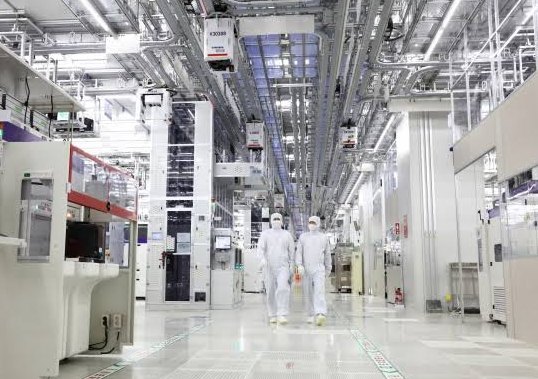
The Employment Permit System (EPS) is a government-to-government programme. HRD Korea runs the EPS-TOPIK exam and the worker roster; the Ministry of Employment and Labor supervises employers and handles labour complaints. You cannot choose your employer — Korean employers choose workers from the roster — but you are protected by Korean labour law from the first day.
Countries that send workers
Seventeen countries currently send workers through EPS: Bangladesh, Cambodia, China, Indonesia, Kyrgyzstan, Laos, Mongolia, Myanmar, Nepal, Pakistan, the Philippines, Sri Lanka, Tajikistan, Thailand, Timor-Leste, Uzbekistan and Vietnam. Kazakhstan has been announced as a future partner but workers are not yet being sent. Each country has its own exam dates and quota, and some countries pause intake from time to time — check your government's EPS desk and eps.go.kr for the current status.
2026 quota by sector
| Sector | Approx. 2026 quota |
|---|---|
| Manufacturing | 50,000 |
| Agriculture & livestock | 10,000 |
| Fishing | 7,000 |
| Construction | 2,000 |
| Services | 1,000 |
| Flexible allocation | 10,000 |
| Total | 80,000 |
Source: Korean government quota announcement, December 2025. Quotas for each sending country are set separately.
Step by step
- Register and prepare. Apply through your country's designated EPS agency (for example, the Department of Foreign Employment in Nepal). Be sure you are 18–39, have no criminal record and have never stayed illegally in Korea.
- Pass EPS-TOPIK. The exam tests reading and listening about workplace and daily life. The exam is moving from paper to computer-based testing; format details, fees (roughly USD 24–28 depending on country) and dates are announced by HRD Korea and your country's agency. Some sectors also require a skills test or a medical check. Study guide · Free EPS-TOPIK mock test
- Enter the roster. Candidates are ranked by score. Roster eligibility is valid for about 2 years — if no employer selects you, you may need to retake the exam.
- Get selected and sign the contract. The standard labour contract is provided in your language. Read the wage, working hours, rest days and housing terms before signing.
- Pre-departure training and E-9 visa. You complete a short training course and receive the E-9 visa for entry.
- Orientation in Korea. A mandatory orientation of about 3 days is held after arrival, covering labour law, safety, insurance and how to get help.
- Register your residence. Apply for your Alien Registration Card (ARC) at the immigration office within 90 days.
Length of stay and changing workplaces
- Stay: up to 3 years at first, extendable by 1 year 10 months if your employer applies — maximum 4 years 10 months.
- "Sincere worker" re-entry: workers who finish their term with a clean record and an employer who asks for them can return without taking EPS-TOPIK again. The waiting period before returning has changed over the years — confirm the current rule.
- Changing workplaces is allowed only in specific cases — closure of the business, unpaid wages, abuse or harassment, unsafe conditions, or the employer ending the contract. Apply at the local employment centre within one month, then you generally have 3 months to find a new employer in the same sector. In general you may change up to 3 times in the first 3 years and 2 times during the extension; changes caused by the employer's fault are not counted.
- Before you leave a job on your own, call a support centre (see rights) so the change is recorded as employer-caused if that is the reality.
Moving up: E-7-4, E-7-4R and F-2-R
After years of E-9 work, many people want to stay longer and bring family. Korea has points-based routes for experienced workers:
| Visa | Main conditions (summary) | Stay |
|---|---|---|
| E-7-4 (skilled worker, points) | 4+ years on E-9/E-10 (or H-2) within the last 10 years; recommendation from a workplace; a job offer of 2+ years at about KRW 26 million/year or more; at least 200 of 300 points, with at least 50 points from income and 50 from Korean ability. 2026 quota about 33,000. | Up to 2 years per grant, renewable; family may join (F-3) |
| E-7-4R (regional) | 2+ years on E-9/E-10 (or H-2) within 10 years; salary and contract similar to E-7-4; TOPIK 2 or higher; a job in a population-decline area that has a quota. | Up to 3 years; can later move to F-2-R |
| F-2-R (regional resident) | For people who live and work in designated population-decline areas, usually with a local-government recommendation, income or education requirements and TOPIK 4+ (check the local rules). Not open directly from E-9. | Up to 5 years |
Korean points for E-7-4: TOPIK 2 ≈ 50 points, TOPIK 3 ≈ 80 points, TOPIK 4 or higher ≈ 120 points. In other words, reaching TOPIK 3–4 can be worth as much as several extra years of income. See our TOPIK I and TOPIK II guides.
Quotas, points tables and salary thresholds are updated by the Ministry of Justice (hikorea.go.kr) every year, so treat these figures as a guide, not a guarantee.
Other work visas: E-7, E-8, F-4, D-10
| Visa | Who it is for | Key points |
|---|---|---|
| E-7 (specific activity) | Professionals and skilled workers sponsored by an employer (IT, engineering, design, marketing, some semi-skilled categories). | Usually a bachelor's degree or relevant experience and a minimum salary linked to Korea's GNI. Employer must sponsor you. |
| E-8 (seasonal worker) | Seasonal farm and fishing work through agreements between local governments and partner countries. | Short stays (about 3–8 months, depending on the programme), no extension. Wages must be paid directly and in full. |
| F-4 (overseas Korean) | Ethnic Koreans from China and the former Soviet countries who can prove Korean ancestry. | Wide freedom to work. Reports indicate that the older H-2 (working visit) visa was integrated into F-4 in early 2026 — confirm the latest category with the immigration office. |
| D-10 (job-seeker) | Graduates of Korean universities and some others looking for work. | After the 2025 reform a Korean degree holder can stay up to 3 years in 1-year steps while job-hunting. See studying at a university. |
| E-2 (foreign-language teacher) | Native English speakers from a short list of countries. | Bachelor's degree and criminal-record check required. Not an option for most of our readers. |
Working holiday (H-1)

The working holiday visa lets young people from partner countries live in Korea for up to a year and work to support travel. It is only for citizens of countries that have a bilateral agreement with Korea. Nepal, Myanmar, Indonesia, Vietnam, Russia and the Central Asian countries are not on the list. Japan and France are.
| Country | Typical age | Approx. yearly quota |
|---|---|---|
| Japan | 18–25 (some categories up to 30) | about 10,000 |
| France | 18–30 | about 2,000 |
| Australia, Germany, Denmark, Sweden | 18–30 (Germany/Denmark up to 34 in some listings) | No fixed limit in many listings |
| Canada | 18–30/35 | several thousand |
| United Kingdom, New Zealand, Taiwan, Hong Kong, Spain, Italy and others | 18–30 or 18–35 | from a few hundred to several thousand |
Age limits and quotas differ between published lists and change by agreement. Check with the Korean embassy in your country and the official list at whic.mofa.go.kr before applying.
- Apply before you travel at a Korean embassy, consulate or visa centre in your home country.
- Typical stay: up to 12 months (some countries differ). Most nationalities can use the visa only once.
- Work is meant to be secondary to travel. Entertainment venues and regulated professions are usually excluded.
- Documents: passport, application form, proof of funds (roughly KRW 3 million is commonly cited), travel insurance, a travel plan, and sometimes a health certificate. Japan and France applicants usually pay no visa fee; others typically pay USD 40–80.
- Korean helps a lot. Cafés, hotels, guesthouses and retail jobs prefer staff who speak some Korean — a beginner level of Hangul and daily vocabulary is a good start before you land.
Finding a job legally — and spotting scams
Official and reliable channels
- EPS (eps.go.kr) — the only legal route to E-9 jobs. There is no private application.
- Work24 (work24.go.kr) — the Ministry of Labor's job portal (Korean). Local employment centres can help foreign residents.
- HiKorea (hikorea.go.kr) — immigration services: visa applications, ARC appointments, student part-time work permits.
- Company job boards such as Saramin, JobKorea, Wanted and LinkedIn for E-7 style jobs; Albamon and Alba Chunguk for part-time work.
Red flags
- Anyone asking for a "recruitment", "training" or "equipment" fee before you start.
- Very high pay for an entry-level job with no experience, or "salary to be discussed".
- Employer hidden behind an agency, or interviews held only through KakaoTalk or other chat apps.
- A request to hand over your passport or ARC.
- No written contract in a language you understand.
Your rights, pay and insurance
| Topic | What to know |
|---|---|
| Minimum wage (2026) | KRW 10,320 per hour — about KRW 2,156,880 per month (209 hours incl. paid rest day). |
| Working hours | 40 hours a week plus up to 12 hours overtime. Overtime, night and holiday work are paid at a premium. Agriculture and fishing have different limits but minimum wage still applies. |
| Four major insurances | Industrial accident (employer pays), employment insurance, national health insurance and national pension. Employers must enrol you from your first day. |
| E-9 extras | Departure guarantee insurance (paid by the employer, lump-sum on leaving) and return-cost insurance. Many E-9 workers can claim a pension lump-sum refund when they leave Korea — check your country's rules. |
| Unpaid wages | You generally have 3 years to claim. Keep your contract, payslips, bank statements, messages and photos. |
| Passport | An employer may not keep your passport or ARC. |
Help lines (save these numbers)
- 1345 — Immigration Contact Center, multilingual. Since 2026 there is a separate option for reporting human-rights violations.
- 1350 — Ministry of Employment and Labor counselling for unpaid wages, dismissal and workplace problems.
- 112 — police emergency. 119 — fire and ambulance.
- Foreign workers' support centres and your embassy's labour desk can also help. Get treated first if injured, then file an industrial-accident claim — you do not need your employer's permission.
First weeks in Korea
- Orientation: attend the mandatory EPS programme.
- ARC: register at your local immigration office within 90 days via the HiKorea appointment system.
- Bank account: usually opened with your passport and ARC. Your salary must be paid directly into your account, in full.
- Sending money home: use licensed banks or licensed remittance providers; avoid informal transfers.
- Health: national health insurance is compulsory; your employer enrols you and pays half of the premium.
Why Korean level changes everything
Korean ability opens doors at every stage — better jobs on the roster, safer workplaces (you can read safety signs and understand instructions), and immigration points when you want to stay long-term.
| Goal | Language requirement |
|---|---|
| E-9 via EPS | EPS-TOPIK (not the general TOPIK) |
| E-7-4 points | TOPIK 2 ≈ 50 · TOPIK 3 ≈ 80 · TOPIK 4+ ≈ 120 points |
| E-7-4R | TOPIK 2 or higher |
| F-2-R | TOPIK 4 or higher (check local rules) |
| Permanent residence (F-5) | Completion of the Korea Immigration & Integration Programme (KIIP) or a comprehensive evaluation; rules change |
Official sources
- EPS Korea · HRD Korea
- HiKorea (immigration) · Ministry of Employment and Labor
- Work24 · Working Holiday Information Center · KIIP (socinet.go.kr)
This page is general information, not legal or immigration advice. Rules, quotas and fees change; check the official websites or the Korean embassy in your country before making decisions or payments.
Frequently asked questions
Can I work in Korea without speaking Korean?
Some jobs allow it at the start, but Korean is the biggest factor in pay, workplace safety and visa upgrades. EPS (E-9) workers must pass the EPS-TOPIK exam, and points-based visas such as E-7-4 award up to 120 points for Korean ability (TOPIK 4 or higher).
How do I get a job in Korea through EPS?
Register in your country's EPS sending agency, pass EPS-TOPIK, enter the worker roster, get selected by a Korean employer, sign a standard labour contract, complete pre-departure training, get an E-9 visa and attend the mandatory orientation after arrival. Private brokers cannot legally charge placement fees for E-9 jobs.
How long can I stay on an E-9 visa?
The first contract is up to 3 years, and an employer can request an extension of 1 year and 10 months, for a maximum of 4 years and 10 months. After that, some workers move to the skilled-worker E-7-4 route.
Is there a working holiday visa for Nepal, Myanmar, Indonesia or Vietnam?
No. The working holiday (H-1) visa exists only for citizens of countries that have a bilateral agreement with Korea. Japan and France do; Nepal, Myanmar, Indonesia, Vietnam and the Central Asian EPS countries do not.
What is the minimum wage in Korea in 2026?
KRW 10,320 per hour, which is about KRW 2,156,880 per month for a standard 209-hour month including the paid weekly rest day.
Who do I call if my employer does not pay me or takes my passport?
Call the Immigration Contact Center on 1345 (multilingual; there is a separate option for human-rights violations) or the labour counselling line 1350. Employers are not allowed to hold your passport.
Get ready for Korea: learn Korean free
Create a free account to practise EPS-TOPIK, TOPIK and everyday Korean, keep your scores and get a personal review notebook.
Create a free account